
Research project
PlastiLoo: Open Design for Dry Toilets made of Recycled Plastic
Inadequate sanitation and plastic waste pose significant challenges, endangering public health and contributing to environmental pollution in many areas of Sub-Saharan Africa. These issues lead to serious risk for public health and environmental pollution, both undermining social and economic development.
The PlastiLoo Project aims to address this by providing innovative and sustainable solutions.
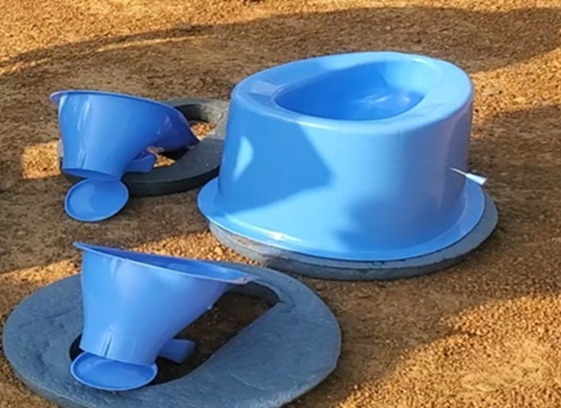
OST has been collaborating with Austrian design studio EOOS NEXT on open-source dry toilet designs. The solution separates faeces and urine into two separate products. There are several advantages of source separation:
- When faeces are kept dry, odour and greenhouse gas emissions are reduced and a smaller volume of hazardous waste is generated.
- Urine, which contains most of the phosphorus and nitrogen from the human diet but very few pathogens, can be reused as fertiliser.
- Dry human waste can be treated through dehydration, composting or biochar production, thereby creating an additional reusable product.
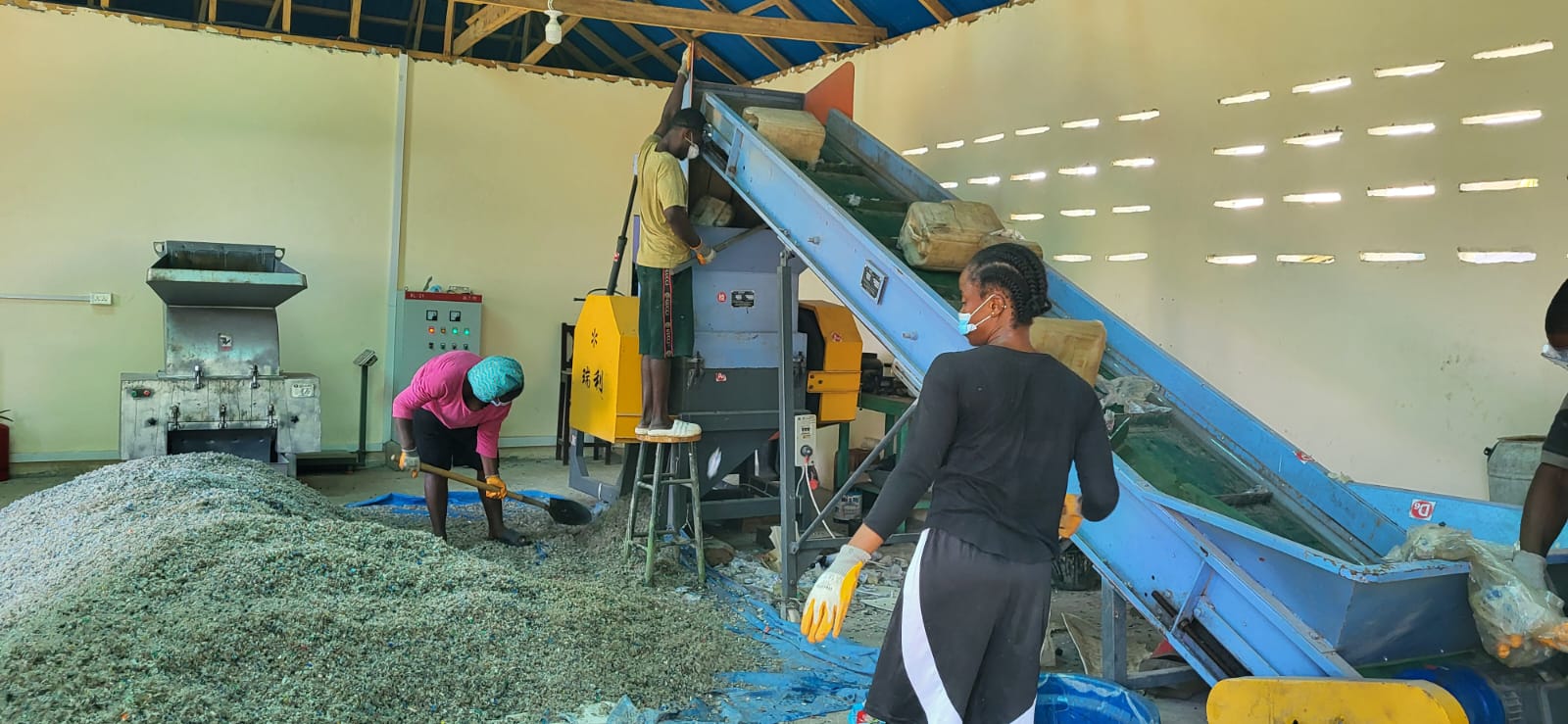
In this project, we aim to develop local production of existing designs using recycled plastic, in order to address both the sanitation and plastic waste challenges.
The project focuses on a pre-commercial pilot phase to establish the technical and economic feasibility of using recycled plastic for toilet production. The specific objectives are:
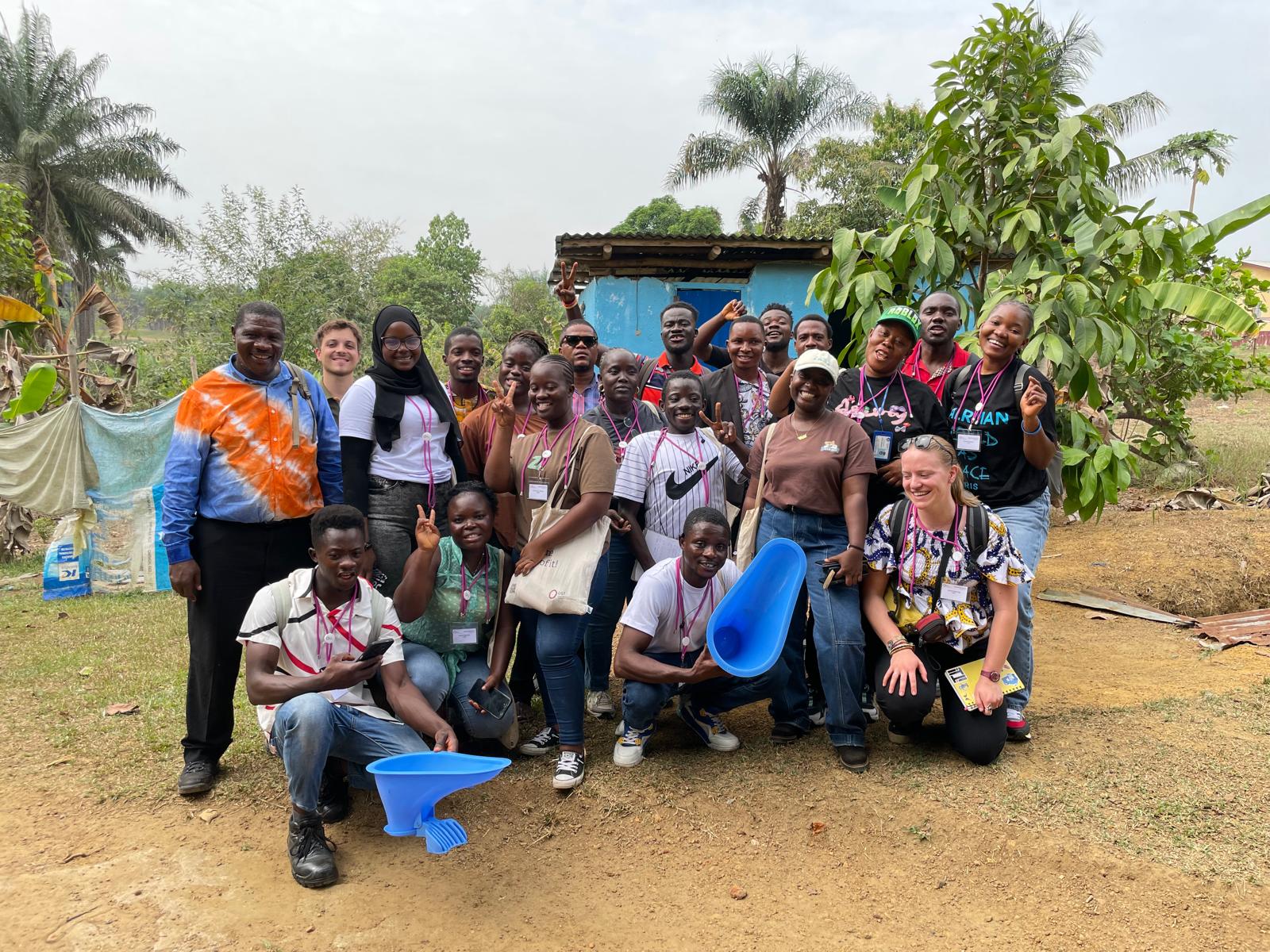
- To set up a pilot production of two types of recycled-plastic toilets and produce a small series (approximately 60 units) in Liberia and Kenya.
- To evaluate the pilot products with a focus on the product itself in laboratory conditions, as well as on user experience in real-world situations, in order to optimise the production process and material composition.
- To develop an economic and technical proof of concept and a self-sustaining business and financing model for upscaling.
Read more:
Funding:
Partner:
Team:
Dr. Dorothee Spuhler
IBU Institute for Civil and Environmental Engineering Wasser & Abwasser, Nachhaltige Entwicklung, Globale Zusammenarbeit, Projektleiterin, Dozierende
+41 58 257 17 11dorothee.spuhler@ost.ch
Prof. Daniel Schwendemann
IWK Institute for Materials Technology and Plastics Processing Leiter Fachbereich Compoundierung / Extrusion, Professor, Profilleiter Mechanical Engineering
+41 58 257 49 16daniel.schwendemann@ost.ch
Angela Tetteh Tawiah
IBU Institute for Civil and Environmental Engineering
+41 58 257 44 29angela.tawiah@ost.ch
Carla Liera
IBU Institute for Civil and Environmental Engineering
+41 58 257 37 42carla.liera@ost.ch