


Research project
PFAS in soil washing
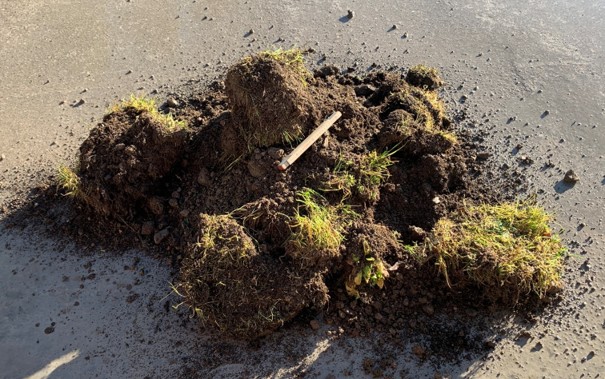
Soil washing is currently the only internationally established industrial-scale process for treating large quantities of PFAS-contaminated soil and excavated material. The aim is to separate the contaminants from the gravel and sand, which make up most of the material, and concentrate them as much as possible in the wash water and fine fraction (filter cake).
PFAS have been used since the 1950s in applications such as fire-fighting foams, food packaging, textiles, and pesticides. Due to their persistence, bioaccumulation and toxicity, they are considered to pose a risk to the environment and human health. Their widespread use means that PFAS-contaminated soil and excavated material are becoming an increasingly technical and economic challenge in construction projects.
For large quantities of contaminated mineral materials, soil washing is currently one of the few decontamination methods available on an industrial scale. PFAS are not destroyed in this process, but are removed from the gravel and sand fractions through screening, washing and separation processes, and concentrated in the wash water and fine fraction. The PFAS-rich residues must then undergo suitable treatment or disposal, such as thermal treatment.
As treatment capacities are currently limited and costly, the processes are undergoing continuous development. The aim is to consolidate the PFAS into a highly concentrated, small fraction, thereby significantly reducing the effort required for further treatment and disposal. Meanwhile, the cleaned gravel and sand fractions can be returned to the material cycle as mineral building materials.
Duration: 01.09.2025 - 01.09.2026
Funding:
Industry
Partner:
Confidential
Team:
Prof. Martin Däscher
UMTEC Institute for Environmental and Process Engineering Leader of the group Raw Materials and Recycling
+41 58 257 31 58martin.daescher@ost.ch

Jana Hacker
UMTEC Institute for Environmental and Process Engineering Project Leader
+41 58 257 37 54jana.hacker@ost.ch