


Research project
PFAS in Incinerator Bottom Ash (IBA)
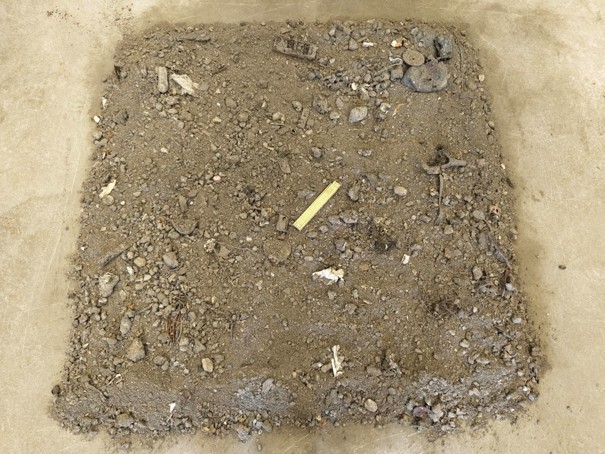
Around 700,000 tonnes of incineration residues from municipal waste-to-energy (WTE) plants are deposited in landfills in Switzerland in the form of incinerator bottom ash (IBA) every year. On behalf of a landfill operator, UMTEC is investigating the PFAS contamination of IBA from various WTE plants, as well as the factors influencing the mobilisation and release of PFAS into landfill leachate.
PFAS have been used since the 1950s in applications including fire-fighting foams, food packaging, textiles, and pesticides. Due to their persistence, bioaccumulation and toxicity, they are considered a concern for the environment and human health. Type D landfill sites are used to dispose of IBA from municipal WTE plants. Landfill operators require further research into PFAS contamination in slag, ongoing PFAS input, PFAS mobilisation into leachate and resulting leachate treatment requirements.
While the analytical methods currently in use tend to yield relatively low PFAS levels in deposited IBA, PFAS concentrations approaching regulatory limits are sometimes detected in landfill leachate. The research commission awarded to UMTEC aims to understand the causes of this discrepancy, identify the relevant release mechanisms, and derive appropriate measures.
UMTEC is sampling, fractionating and analysing IBA from various waste-to-energy plants, and characterising their PFAS concentrations and profiles. Laboratory experiments are also being conducted to investigate trigger factors relevant to PFAS mobilisation and release under landfill conditions. Recommendations for robust laboratory analysis, as well as for the operation and monitoring of IBA landfills, will be derived from the results.
Duration: 01.02.2025 - 31.12.2026
Funding:
Industry
Partner:
Confidential
Team:
Prof. Martin Däscher
UMTEC Institute for Environmental and Process Engineering Leader of the group Raw Materials and Recycling
+41 58 257 31 58martin.daescher@ost.ch
Jana Hacker
UMTEC Institute for Environmental and Process Engineering Project Leader
+41 58 257 37 54jana.hacker@ost.ch