
Research project
Building Confidence in the Face of Uncertainty – the Role of the Safety Case
Uncertainty is not ignorance: it is incomplete knowledge that means it is not possible to describe exactly an existing state or future outcome. Provided the uncertainties are represented, managed and communicated appropriately, decisions can be made with confidence, even in the face of substantial uncertainty.
There are a lot of decisions that have to be made in the face of uncertainty. Understanding the uncertainty (and, where possible, quantifying it) can help the best decisions to be made. This is particularly true when dealing with the complex uncertainties around the geological disposal of nuclear waste. In this context, there is thus a strong link between uncertainty management and the safety case. We explored this link in multi-disciplinary frameworks and deduced best practice solutions.
We participated in the strategic study "Uncertainty Management multi-Actor Network" (UMAN), initiated in the framework of the European Joint Programme on Radioactive Waste Management (EURAD). The context was Radioactive Waste Management programmes for near-surface and geological disposal of radioactive waste. We focused predominantly on developing a common agreed understanding among different actors of national disposal programmes on strategies and approaches for uncertainties management by sharing knowledge and experience. One subtaks was in particular dedicated to the development of a comprehensive overview about different approaches and uncertainty management options to assess and, where is possible and relevant, to reduce risks and optimise safety. It became apparent that a common understanding of what safety relevance means for any given uncertainty is fundamental for adequate uncertainty management. Moreover, uncertainties and hence their safety relevance evolve along the disposal programme. Thus, this common understanding must therefore be maintained over time. At any given milestone, the relevant questions to be asked and answered are: Is an uncertainty safety-significant and relevant for the given decision at hand? Must and can it be reduced, avoided, or can its consequences be mitigated? Can it be dealt with accordingly in the safety case that accompanies the decision at hand? An outlook to further steps in the programme is also warranted.
Uncertainty management and related communication is also an ongoing topic within the OECD Nuclear Energy Agency (NEA). Recently, the Forum on Stakeholder Confidence (FSC) and the Integration Group for the Safety Case (IGSC) held a Joint Workshop with stakeholders from Germany, Sweden and Switzerland to assess the challenges in communicating scientific safety evidence to non-technical stakeholders and to find ways to effectively communicate such knowledge to increase confidence in the safety case. The workshop also provided an opportunity to learn from local stakeholders in Switzerland and abroad about fostering confidence among non-technical audiences and creating engagement in the waste repository development process. Through its role in the IGSC, Thomas Kämpfer significantly contributes to these exchanges and the work. He was co-author of the summary report of above workshop.
Duration: 01.01.2022 - 30.06.2024
Partner:
Nagra, Nationale Genossenschaft für die Lagerung radioaktiver Abfälle, Wettingen, Schweiz
OECD Nuclear Energy Agency (NEA)
Team:
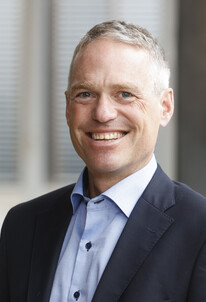
Prof. Dr. Thomas Kämpfer
KMN Competence Center for Mathematics and Natural Sciences
+41 58 257 13 19thomas.kaempfer@ost.ch